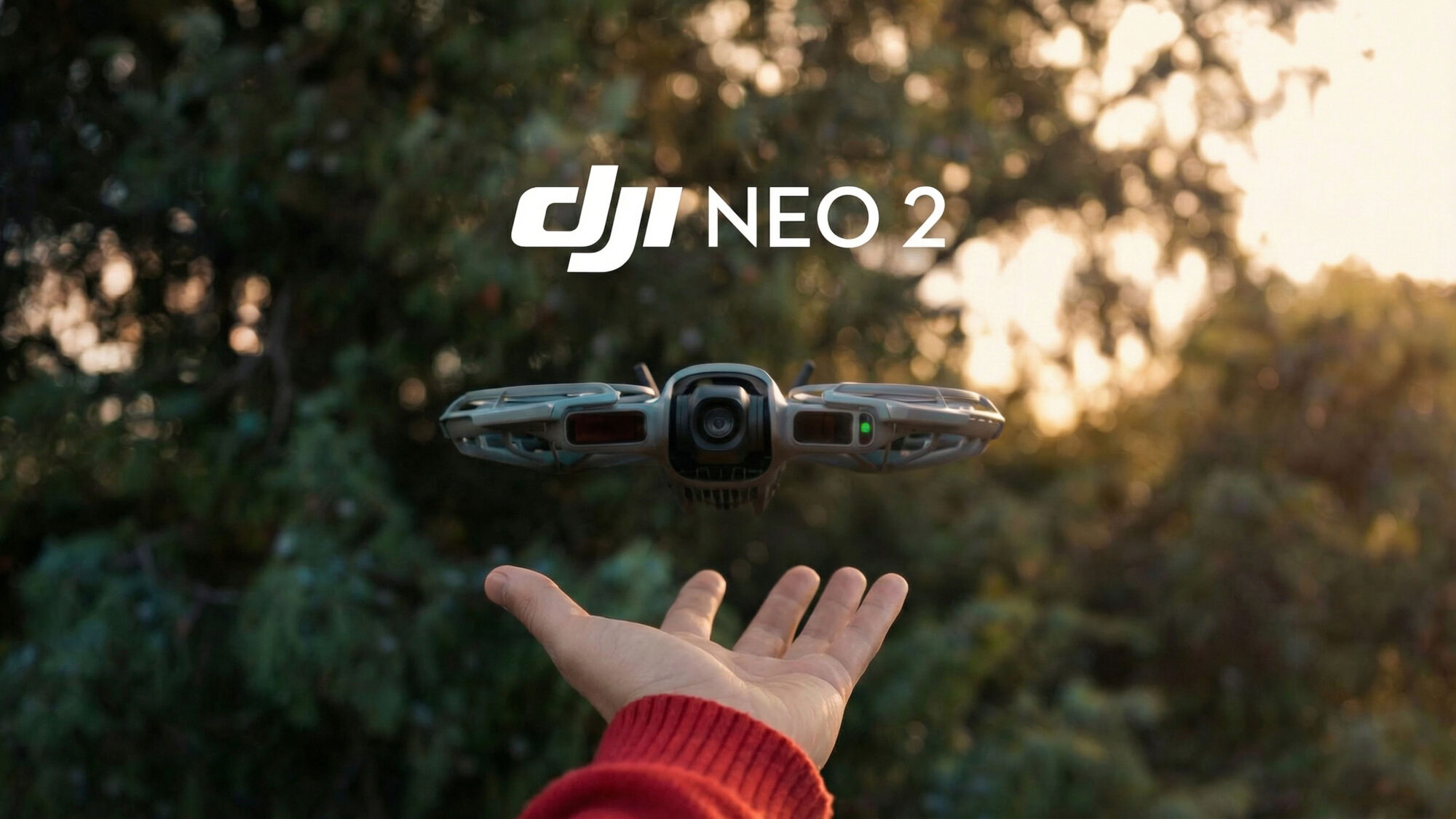
In this post, I want to introduce the DJI Neo 2, a mini drone that keeps the philosophy of its predecessor, the DJI Neo, but takes a huge leap in capabilities.
DJI has done it again: with obstacle detection in every direction, a more advanced intelligent tracking system, and smoother, more stable 4K video, the Neo 2 becomes a safer, more intuitive, and versatile drone. It can automatically follow you, avoid collisions, and capture professional-looking shots even if you have little or no flying experience.
It retains everything that made the previous model popular but introduces key improvements in the areas that really matter when taking off: safety, flight time, and image performance. Below, we’ll look at the most important new features that make it a more complete and capable drone, while keeping its beginner-friendly approach.
If you want to get the most out of the Neo 2’s camera, a highly recommended option is to use Freewell ND filters, which help control light, enhance contrast, and achieve a more cinematic look. You can check out the specific kit here: ND Filters for DJI Neo 2 by Freewell.
Before we dive in, here’s a cinematic video shot with the Neo 2 so you can see what this little drone is capable of.
What’s New in the DJI Neo 2?
Omnidirectional Sensors
The Neo 2 comes with sensors in all directions, plus LiDAR technology, allowing it to detect obstacles even in low light. With this 360° protection, it can safely fly indoors, in tight spaces, or near people.
Improved ActiveTrack
The Neo 2’s intelligent tracking system has been completely redesigned. It can now recognize and follow subjects without a controller or mobile device, using AI algorithms alone. You can run, ride a bike, or skate, and the drone will automatically keep the subject in frame.
Additionally, the new QuickShots expand creative options with pre-programmed camera moves to capture dynamic shots effortlessly.
Gesture Control: Fly Without a Controller
One of the most impressive features of the Neo 2 is its advanced gesture control. With just your hands, you can:
- Move the drone in any direction
- Adjust the distance by bringing it closer or farther away
- Change the tracking angle to capture from the front, back, or sides
- Lock the drone’s position by closing your fist
- Take off from your palm using the physical button and safe launch system
This makes the Neo 2 one of the best drones for beginners, allowing you to record without extra equipment.
New Digital Transmission Module
The Neo 2 can further enhance its range and stability with the optional digital transmission module, enabling DJI O4 connectivity, the most advanced system from DJI. This unlocks:
- Up to 10 km of range
- FPV view in 1080p at 100 fps
- Lower latency and improved camera control
Better Battery Life and Storage
The battery has also been improved, though in real-world use it lasts about 10–12 minutes. It also comes with 49 GB of internal storage and QuickTransfer, so you can transfer videos to your phone instantly.
This makes it a perfect drone for travel, vlogs, and content creation.
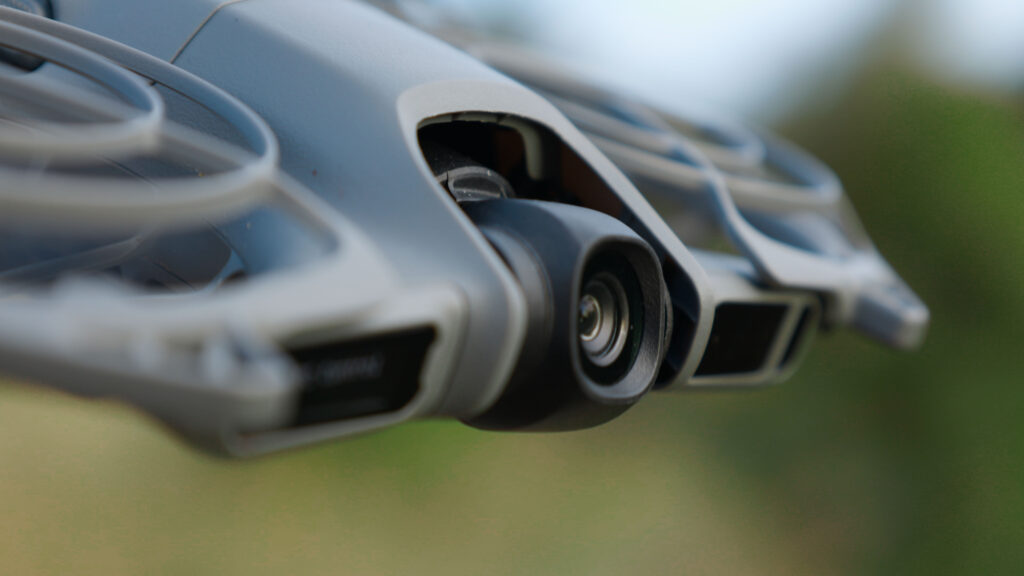
Where Can You Fly the DJI Neo 2?
The Neo 2 weighs less than 250g and is classified as C0, making it one of the least restricted drones on the market.
To fly it legally, you need to:
- Register as an operator with AESA
- Be familiar with the user manual
- Insurance is not mandatory but recommended
In urban areas, like other C0 drones, you must notify the Ministry of the Interior at least 5 days in advance. Below, you can include a button linking to drone flight regulations by country.
DJI Neo 2 Specifications
Drone
| Weight | 151g (without digital transmitter) 160g (with digital transmitter) |
| Dimensions | 147 × 171 × 41 mm / 167 × 171 × 54 mm |
| Max takeoff altitude | 2000 m |
| Max flight time | 19 minutes (10–12 min realistic) |
| Max wind resistance | 10.7 m/s (level 5) |
| Max range | 7 km |
| GNSS | GPS + Galileo + BeiDou |
| Sensors | Omnidirectional monocular vision + downward infrared + forward LiDAR |
| Internal storage | 49 GB |
| Class | C0 (UE) |
Camera
| Sensor | 1/2” CMOS |
| Video Resolution | Horizontal video: 4K (4:3): 3840 × 2880 a 60/50/30 fps 1080p (4:3): 1440 × 1080 a 60/50/30 fps 4K (16:9): 3840 × 2160 a 100*/60/50/30 fps 1080p (16:9): 1920 ×1080 a 100*/60/50/30 fps Vertical video: 2.7K (9:16): 1512×2688 a 60/50/30 fps |
| Color mode and sampling method | Normal |
| Lens | Field of View: 119.8° 35mm Equivalent Focal Length: 16.5 mm Aperture: f/2.2 Focus Range: 0.7 m to ∞ |
| Stabilization | RockSteady (optional) |
| Shutter speed | Video: 1/8000-1/30 s Photo: 1/8000-1/10 s |
| ISO | Photo 100–3200 (single shot, auto) 100–12,800 (burst mode / self-timer, auto) 100–12,800 (manual) Video 100–12,800 (auto) 100–12,800 (manual) |
Battery & Transmission
| Capacity | 1606 mAh |
| Weight | 46 g |
| Transmission | Standard: Wi-Fi video transmission Optional: DJI Neo 2 digital transmitter (O4) |
| Frequencies | 2.400-2.4835 GHz 5.170-5.250 GHz 5.725-5.850 GHz |
| Antennas | 2, 1T2R |
Frequently Asked Questions About the DJI Neo 2
Yes. Weighing less than 250 grams and classified as C0, you don’t need a pilot license. However, registering as an operator with AESA and following local regulations is mandatory.
Yes. The Neo 2 can be flown without a controller thanks to gesture control, intelligent tracking, and automated modes.
It’s ideal for vloggers, content creators, travelers, and anyone looking for a compact, safe, and beginner-friendly drone.
Yes, it supports 4K video recording up to 100 fps, with multiple resolution and frame rate options.
Maximum flight time is up to 19 minutes, though real-world use averages 10–12 minutes per charge.